Is the SUP label still mandatory? Will the wording “Product contains plastic” disappear? And what do the new European packaging rules mean for paper cups and reusable cups?
There is still a great deal of uncertainty surrounding the SUP label. Especially now that the new European Packaging and Packaging Waste Regulation (PPWR) has applied since August 2026, we regularly receive questions about the future of the familiar SUP logo on paper and cardboard drink cups.
The most important news is actually quite simple: the SUP label has not been abolished.
For drinking cups that fall under the European Single-Use Plastics Directive (SUPD), the existing marking requirements remain in force. At the same time, new European legislation is being introduced over the coming years that will have a significant impact on packaging, single-use cups, reusable cups and the hospitality sector.
In this article, we explain what currently applies and what we can expect towards 2027, 2028, 2029 and 2030.
What Is the SUP Label?
SUP stands for Single-Use Plastics.
The European Single-Use Plastics Directive, Directive (EU) 2019/904, is designed to reduce the impact of certain single-use plastic products on the environment.
Since 3 July 2021, certain products that contain plastic, either wholly or partly, have been required to carry a prescribed marking. Drinking cups are one of the product categories covered by these marking requirements.
This means that a cardboard or paper cup with a plastic coating can also fall under the SUP rules.
The purpose of the marking is to inform consumers that the product contains plastic and should not simply be discarded into the environment.
The European Commission continues to confirm in 2026 that drinking cups are among the products covered by the SUP marking requirements.
Is the SUP Label Still Mandatory in 2026?
Yes. At present, there has been no European legislative change that removes the SUP label requirement for the relevant drinking cups.
The introduction of the new European PPWR does not automatically mean that the existing SUP label has been cancelled.
For cups that contain plastic, the relevant European implementing regulation continues to require a specific printed marking.
Minimum Marking Dimensions
| Cup volume | Minimum marking size |
|---|---|
| Less than 500 ml | 1.4 × 2.8 cm |
| 500 ml or more | 1.6 × 3.2 cm |
The design of the marking is also defined at European level. The logo therefore cannot simply be made smaller, modified or redesigned according to individual preferences.
For companies ordering printed paper cups, it is therefore important to allow sufficient space for the mandatory marking when preparing the cup design.
Biobased or Biodegradable Plastic Can Also Fall Under the SUP Rules
One issue that regularly causes confusion is the use of alternative coatings.
A paper or cardboard cup does not automatically become SUP-free simply because its plastic coating is biobased or biodegradable.
The European Commission updated its guidance on the Single-Use Plastics Directive in June 2026.
Among other things, the updated guidance clarifies that paper cups with a biobased or biodegradable plastic coating can still fall within the definition of a single-use plastic beverage cup.
Replacing a traditional plastic coating with another type of plastic therefore does not automatically mean that the SUP obligations disappear.
New Rules from August 2026: The PPWR
In addition to the SUP Directive, we are now dealing with another major European development: the Packaging and Packaging Waste Regulation (PPWR).
This is Regulation (EU) 2025/40.
The PPWR applies in the European Union from 12 August 2026 and aims to further harmonise the rules governing packaging and packaging waste.
The regulation covers almost the entire life cycle of packaging, including:
- packaging design;
- recyclability;
- the use of recycled materials;
- reuse;
- waste prevention;
- labelling;
- packaging waste;
- takeaway packaging;
- reusable packaging systems.
Harmonisation is particularly important for companies operating in several EU countries.
Instead of having increasingly different national packaging rules, Europe is moving towards more common requirements for the internal market.
Will the SUP Label Disappear Because of the PPWR?
No, not at this point.
The PPWR does not automatically replace or abolish the Single-Use Plastics Directive.
The European SUP rules and the new packaging regulation therefore need to be considered alongside each other.
This means that packaging may potentially be subject to several different European requirements in the future.
The existing SUP label therefore remains relevant as long as European legislation on this issue remains unchanged.
Important Milestone: Review of the SUP Directive in 2027
The rules may of course change in the future.
The European Commission must evaluate the Single-Use Plastics Directive by 3 July 2027.
The evaluation will consider, among other things, the effectiveness of the current rules, new materials, changing consumption patterns and the development of reusable alternatives.
The European Commission has already started this evaluation. A public consultation was launched at the end of 2025.
The outcome of the evaluation could eventually lead to proposals for new or amended legislation.
There is currently no confirmed end date for the SUP label.
For businesses, it is therefore advisable to work according to the rules currently in force while continuing to monitor developments from the European institutions.
What Will Actually Change in the Coming Years?
The PPWR introduces several important milestones for packaging and the hospitality sector.
2026 – The PPWR Becomes Applicable
Since 12 August 2026, the PPWR has been applicable.
This does not mean that all new obligations become applicable on the same day.
Many requirements will be introduced gradually, and additional European implementing rules still need to be developed for certain provisions.
2026 should therefore be seen primarily as the beginning of a longer transition towards new European packaging rules.
12 February 2027 – Customers Can Bring Their Own Cup or Container
From 12 February 2027, an important change will apply to the takeaway sector.
Hospitality businesses offering hot or cold beverages in takeaway packaging will need to have a system that allows consumers to bring their own suitable container or cup and have it filled.
This also applies to ready-to-eat food sold as takeaway.
A consumer who brings their own suitable container must not be charged more or offered less favourable conditions than for the same product provided in single-use packaging.
For coffee shops, lunchrooms, restaurants, caterers and other takeaway concepts, this will therefore become an important consideration.
12 February 2028 – Reusable Packaging Options
From 12 February 2028, another important step follows.
Hospitality businesses offering hot or cold takeaway beverages or ready-to-eat takeaway food will have to give consumers the option of obtaining the product in reusable packaging within a reuse system.
This goes further than simply allowing a customer to bring their own coffee cup.
Reusable cups and other reusable packaging concepts will therefore become increasingly important within the European takeaway market.
For event organisers, caterers and hospitality businesses, it is therefore worth considering now how reusable packaging could fit into their operations.
From 2028 – New European Packaging Label
The PPWR also introduces a new harmonised European packaging label.
Under the current regulation, packaging will have to carry a harmonised label providing information about its material composition from 12 August 2028, or 24 months after the relevant European implementing rules enter into force, if that date is later.
The aim is to make it easier for consumers to understand how packaging should be sorted and disposed of correctly.
This new packaging label should not be confused with the existing SUP label.
The SUP label warns consumers about the presence of plastic in certain products.
The future PPWR label is intended, among other things, to provide information about material composition and waste sorting.
2029 – Greater Recognition of Reusable Packaging
Specific information requirements will also apply to reusable packaging.
From 12 February 2029, or later where the relevant implementing rules provide for this, reusable packaging placed on the market will need to carry information showing that it is reusable.
Additional information about reuse systems and collection points may be made available through a QR code or another standardised digital information carrier.
This reflects the broader direction of European packaging policy: consumers should increasingly be able to understand what packaging is made from, how it should be used and what should happen to it after use.
2030 and Beyond – A Greater Focus on Circularity
From 2030 onwards, several other important elements of the PPWR will become increasingly relevant.
The European packaging market is increasingly focused on three key principles:
- Reduce – reducing packaging materials and waste.
- Recycle – improving recyclability and the efficient use of resources.
- Reuse – increasing reuse where possible.
Packaging will need to become more recyclable, the use of virgin raw materials will need to decrease, and reuse will play a greater role where appropriate.
For manufacturers and suppliers, this means that price and appearance will not be the only important considerations when choosing packaging.
Material choice, recyclability and the way packaging is collected or reused after use will become increasingly important.
What Does This Mean for Paper Coffee Cups?
Paper and cardboard coffee cups will not suddenly disappear from the European market because of these regulations.
However, there is increasing pressure to reduce the use of single-use packaging and, where possible, move towards alternatives and reuse.
For paper cups with a plastic coating, it remains important for the time being to take the SUP requirements into account.
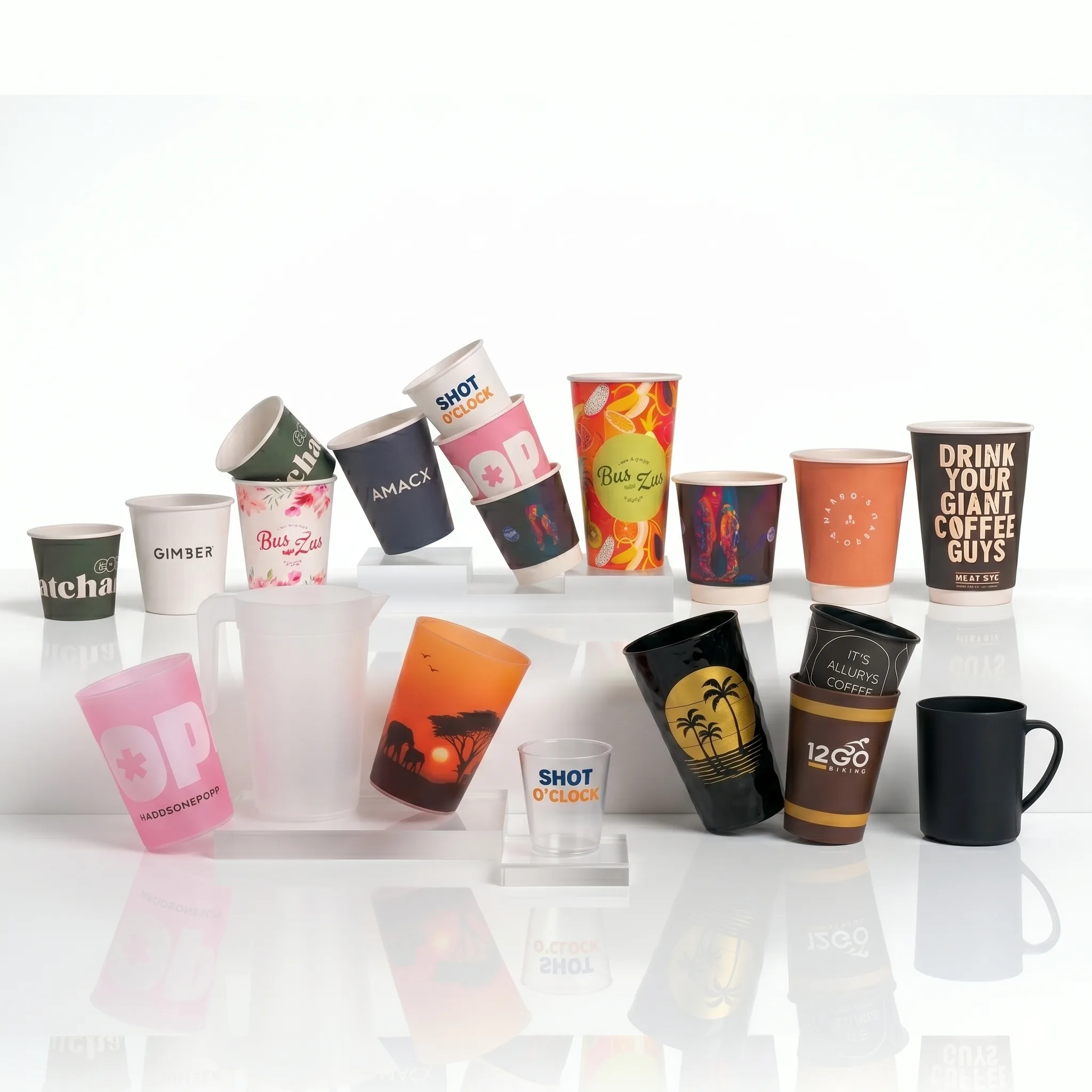
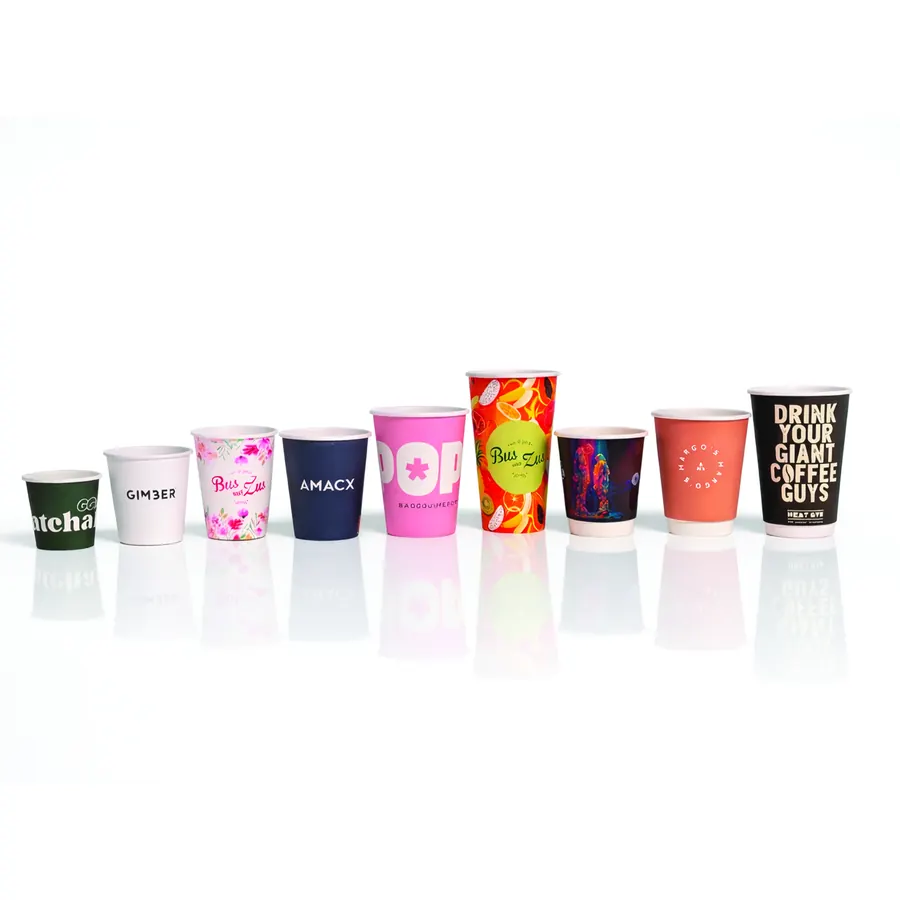
A beautiful full-colour cup design that simply leaves no space for the mandatory SUP marking can therefore create compliance problems.
At PromoCups, we take this into account when designing and producing printed cups.
What About Reusable Cups?
Reusable cups are expected to play an increasingly important role in European packaging legislation over the coming years.
An important distinction is that a cup is not automatically considered reusable simply because it is made from a durable type of plastic.
European rules look, among other things, at the purpose for which packaging is designed and placed on the market and, where relevant under the PPWR, at the actual reuse system in which it operates.
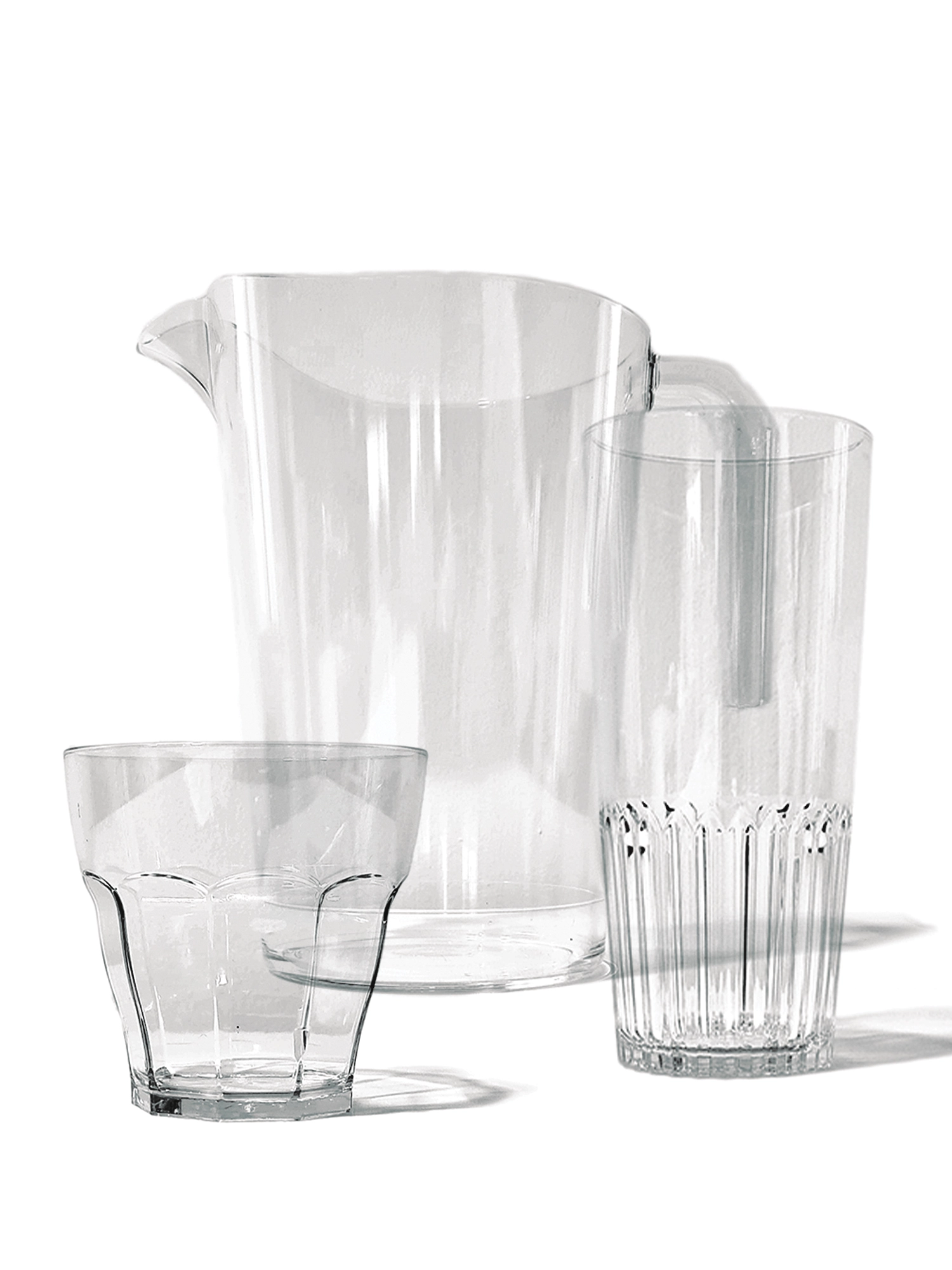
The updated European SUP guidance from 2026 indicates, for example, that reusable drinking cups designed for multiple use cycles and marketed as reusable can fall outside the definition of a single-use plastic beverage cup.
This makes choosing the right type of cup increasingly important.
European Packaging Rules Timeline for Cups
| Date | What Happens? |
|---|---|
| 2021 | European SUP marking requirements for certain drinking cups come into force. |
| 12 August 2026 | The new Packaging and Packaging Waste Regulation becomes applicable. |
| 12 February 2027 | Takeaway hospitality businesses must allow consumers to bring their own suitable cup or container. |
| By 3 July 2027 | The European Commission evaluates the Single-Use Plastics Directive. |
| 12 February 2028 | Takeaway hospitality businesses must offer a reusable packaging option within a reuse system. |
| From 2028 | Harmonised European material labels for packaging become applicable, subject to the timing of the relevant implementing rules. |
| From 2029 | New information and labelling requirements for reusable packaging become relevant. |
| 2030 and beyond | Further PPWR requirements relating to waste prevention, recyclability, recycled materials and reuse become increasingly important. |
Conclusion: The SUP Label Is Not Disappearing for Now
A lot is changing around packaging in Europe, but one misconception can currently be cleared up:
The SUP label has not been abolished.
For drinking cups that fall under the Single-Use Plastics Directive, the applicable marking requirements remain in force.
At the same time, the European packaging market is clearly undergoing significant changes.
With the introduction of the PPWR, hospitality businesses, event organisers, manufacturers, distributors and other companies will face new requirements in the coming years relating to reuse, refill, labelling, recyclability and packaging waste.
In particular, 2027, 2028 and 2030 will be important milestones.
The evaluation of the SUP Directive in 2027 is another development worth monitoring. Only if Europe actually decides to amend the legislation could the current SUP requirements change.
Until then, the principle remains clear: if a drinking cup falls under the current SUP marking requirements, the prescribed marking must continue to be applied.
Need Advice on Printed Cups and SUP Regulations?
At PromoCups, we supply both printed paper cups and a range of reusable drinking cups.
We take the current printing and mandatory marking requirements into account when designing printed cups. We also follow developments surrounding the SUP Directive and PPWR so that we can keep our customers informed when European regulations change.
Looking for the right cup for your application, event or hospitality concept?
We are happy to help you choose the right material, printing solution and approach between single-use and reusable cups.