Are P2P paper coffee cups recyclable? What you need to know in 2026
Paper coffee cups have become part of everyday street life.
From coffee bars to events and offices, they are used everywhere – but one question comes up more and more often:
Are P2P paper coffee cups actually recyclable?
The short answer: yes, but not all of them.
In this blog, we explain exactly how it works and what to look out for when choosing sustainable coffee cups.
What are recyclable coffee cups?
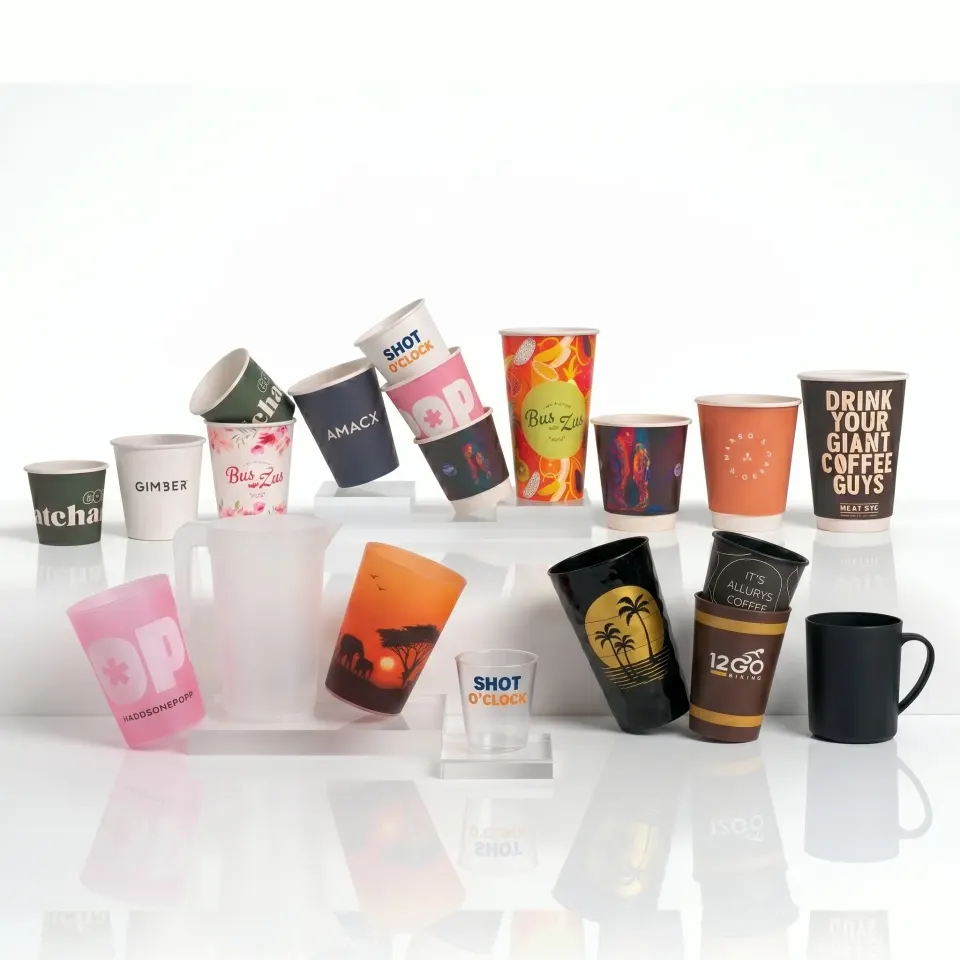
Fortunately, better alternatives are now available: recyclable coffee cups with a water-based coating.
These cups are also known as P2P cups (Paper to Paper).
This means they can be processed together with paper waste.
Key advantages:
- No plastic coating
- Suitable for standard paper recycling
- Less impact on the environment
A commonly used description is:
Products with a water-based barrier coating are suitable for recycling with paper. They do not require a separate or additional waste collection system.
What exactly are P2P cups?
P2P stands for Paper to Paper and refers to the recycling process.
Instead of paper and plastic having to be separated, the cup can go straight into the paper stream.
This makes P2P cups:
- more efficient to recycle
- attractive for companies with sustainability goals
- future-proof under European regulations
In 2026, this standard is expected to become the norm more and more often.
⚠️ Please note: SUPD label mandatory in the Netherlands (P2P cups too)
An important point that often causes confusion:
In the Netherlands, recyclable P2P cups must also carry an SUPD label.
But why is that?
The SUPD (Single-Use Plastics Directive) is European legislation aimed at reducing plastic waste.
Paper coffee cups also fall under this legislation, because:
even P2P cups still contain a (very small) plastic component in the coating.
As a result:
- the cup is legally regarded as a single-use plastic product
- the SUPD logo is mandatory on the cup
- this is separate from how recyclable the cup is
In short:
a cup can be recyclable and still fall under the SUP legislation.
This sometimes confuses customers, but it is purely a matter of legislation and says nothing about the sustainability of the product itself.
👉 If you choose water-based coating cups, you are choosing a solution that is better suited to the future, even though the SUPD label is still mandatory.
When should you choose sustainable coffee cups?
It makes sense to choose sustainable coffee cups if:
- your company wants to do business in an environmentally conscious way
- your customers value sustainability
- you work with events or hospitality
- you want to be prepared for stricter legislation
👉 This is becoming increasingly important, especially for takeaway and events.
The future of coffee cups
The market is moving rapidly towards:
- less plastic
- better recyclability
- reusable alternatives
Recyclable coffee cups with a water-based coating play a major role in this.
At the same time, legislation such as the SUPD remains an important factor that companies need to take into account.
Companies that respond to this now are ahead of the rest.
Frequently asked questions
Are all paper coffee cups recyclable?
No, only cups with a suitable coating, such as a water-based coating.
What does P2P mean?
That the cup can be recycled together with paper (Paper to Paper).
Why is there an SUP logo on a sustainable cup?
Because, legally, the cup still contains a small plastic component and therefore falls under the SUP Directive.
Are sustainable coffee cups more expensive?
Often slightly, but the difference is getting smaller as market demand grows.
Conclusion
Paper coffee cups are not automatically sustainable.
The difference lies in the coating.
Do you want truly sustainable coffee cups?
Then choose:
- Recyclable coffee cups
- Water-based coating cups
- P2P cups
And bear in mind:
the mandatory SUPD label, even for sustainable versions. That way, you make a conscious choice that suits the future.