PE coating or P2P coating? The difference for paper coffee cups
PE coating or P2P coating? This is the difference for paper coffee cups
Paper coffee cups have become indispensable in offices, the hospitality sector and at events. But did you know that not every cup is the same? A crucial difference lies on the inside: the coating.
At PromoCups, we are often asked: “What is the real difference between a PE coating and a P2P coating?” In this article, we explain it in detail so that you can easily make the right choice for your organisation.
Why do paper coffee cups have a coating?
Paper itself is not watertight. To prevent your coffee from soaking straight through the board, every cup has a thin protective layer on the inside.
This coating ensures that the cup:
- does not leak and keeps its shape;
- is suitable for both hot and cold drinks;
- stays firm while you drink.
The type of coating used determines how the cup scores in terms of price, recyclability and current legislation.
PE coating: the trusted standard
A PE (polyethylene) coating is a thin layer of plastic. For many years, this has been the most widely used solution for paper coffee cups. PE-coated cups are technically very strong and widely used in coffee machines, offices and large-scale events.
Characteristics of a PE coating:
- Composition: contains a small amount of plastic (usually <5%).
- Quality: highly resistant to extreme heat and moisture.
- Range: available in virtually all sizes.
- Cost: competitively priced and budget-friendly.
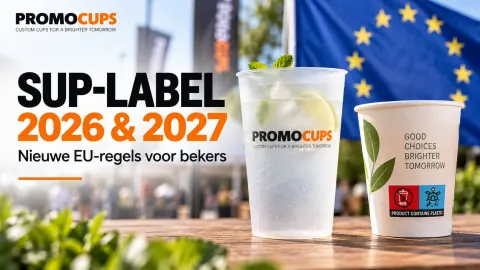
Please note: because a PE coating contains plastic, these cups fall under the EU Single-Use Plastics (SUP) rules. This means they must carry the mandatory SUP marking.
P2P coating: a modern, conscious choice
A P2P (Paper to Paper) coating has been developed as a sustainable alternative to the traditional PE layer. It uses a water-based or plant-based coating that fuses completely with the board. The aim? To maximise recyclability in the paper stream without compromising on quality.
Characteristics of a P2P coating:
- Innovative: no traditional PE plastic layer.
- Circular: a true “paper-to-paper” solution.
- Recycling: specifically designed for better processing in the paper recycling bin.
- CSR: fits perfectly with sustainable business objectives.
PE coating vs. P2P coating: the main differences
The biggest difference lies in the material and how it is processed.
- Recyclability: a PE coating contains plastic and is therefore harder to separate from the board. A P2P coating has been developed precisely to go through the regular paper recycling process more easily.
- Legislation: PE cups fall directly under the SUP rules. P2P cups are often seen as the “plastic-free” option, which in practice means they are less affected by levies.
- Price and availability: PE is usually the most economical and most common option. A P2P coating is slightly more expensive, but is quickly gaining popularity thanks to its sustainable appeal and image benefits.
Which coating suits your use?
The right choice depends entirely on your specific situation:
- Are large volumes and price decisive? → Choose a PE coating.
- Focusing on sustainability and a green image? → Choose a P2P coating.
- Standard coffee machines in the office? → PE is usually chosen here.
- Events, hospitality or conscious branding? → Here we see a strong shift towards P2P.
Conclusion
There is no standard “best” choice; it is about what suits your goals. A PE coating is reliable and affordable, while a P2P coating paves the way for a plastic-free future and better recycling.
The right cup starts with the right coating. At PromoCups, we are happy to help you make this choice.
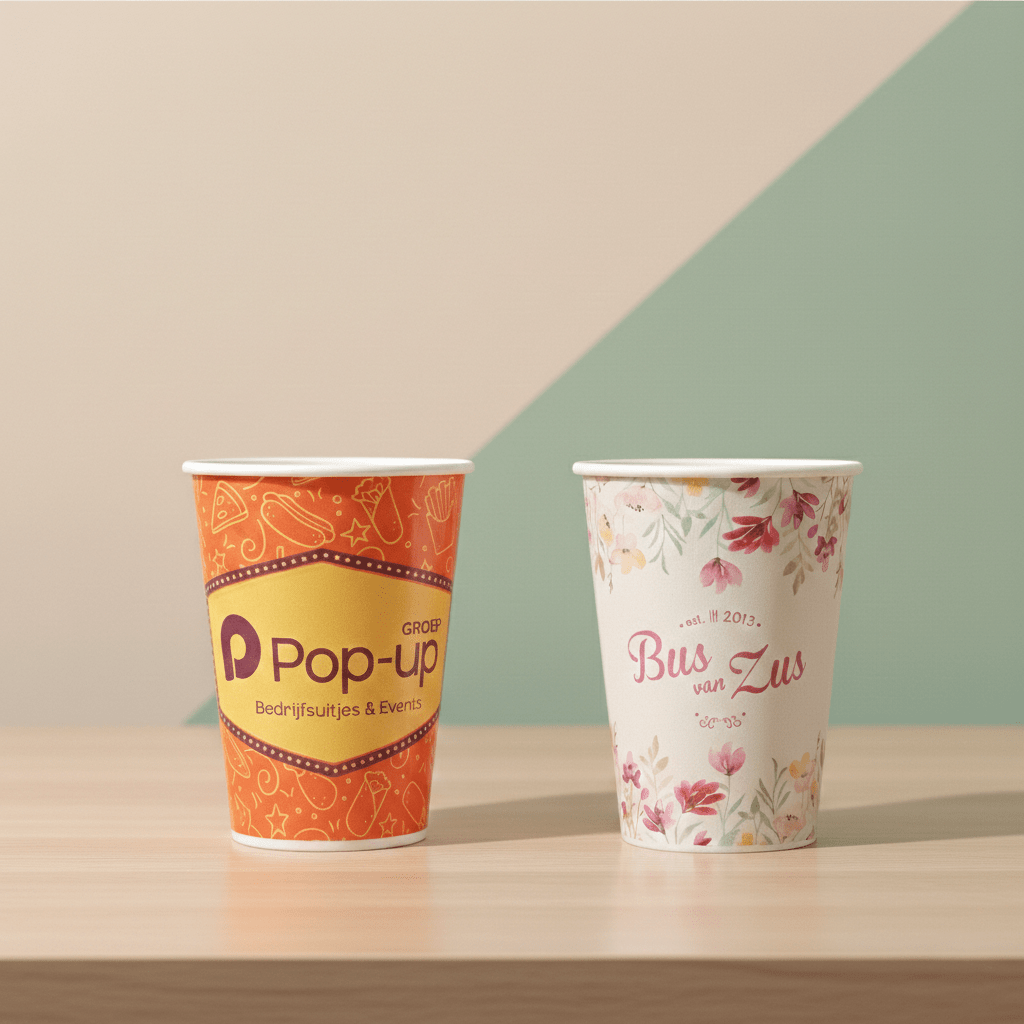
Ready to get started? View our options for full-colour printed coffee cups here